BIM Solutions Georgia Embarks on a New Chapter as Official Resellers of Autodesk

BIM Solutions Georgia Embarks on a New Chapter as Official Resellers of Autodesk   In a significant milestone, BIM Solutions Georgia proudly announces its official partnership with Autodesk, a global leader in innovative software solutions for architects, engineers, and designers. This collaboration marks a pivotal moment in BIM Solutions' commitment to advancing digital construction technologies and empowering industry professionals with cutting-edge tools. Autodesk, renowned for its comprehensive suite of software products spanning architecture, engineering, construction, and manufacturing, has selected BIM Solutions Georgia as an official reseller. This strategic alliance brings together the expertise of BIM Solutions in project management and Autodesk's state-of-the-art technologies to redefine the landscape of digital construction in Georgia. "Our partnership with Autodesk signifies a leap forward in our mission to revolutionize the way projects are planned and executed," said Vytautas Puodziunas CEO at BIM Solutions Georgia. "Autodesk's solutions are at the forefront of industry innovation, and we are thrilled to offer our clients access to these cutting-edge tools." The collaboration includes reseller rights for a range of Autodesk products such as AutoCAD, Revit, Civil 3D, and more. This expanded product portfolio enables BIM Solutions Georgia to cater to the diverse needs of architects, builders, and engineers, fostering efficiency and excellence in project implementation. BIM Solutions Georgia invites everyone to visit and purchase Autodesk software directly from their offices. To sweeten the deal, the company is launching a special promotion, offering exclusive discounts on Autodesk software. This presents an excellent opportunity for individuals and businesses to embrace the power of Autodesk tools at a reduced cost. Clients can now leverage the combined expertise of BIM Solutions Georgia and Autodesk to enhance project workflows, streamline design processes, and ultimately achieve higher levels of productivity. This collaboration not only strengthens BIM Solutions' position in the market but also underscores its commitment to delivering unparalleled value to clients. "As we embark on this journey with Autodesk, our focus remains on empowering our clients with the tools they need to succeed," added Vytautas Puodziunas. "The synergy between our capabilities and Autodesk's cutting-edge software creates a powerful resource for those seeking excellence in digital construction." For BIM Solutions Georgia, becoming an official reseller of Autodesk is more than a business development; it's a commitment to advancing the field of building information modeling (BIM) and driving digital transformation within the construction industry. The partnership sets the stage for exciting new opportunities, technological advancements, and a future where projects are not just built but are crafted with precision and innovation. A distinguishing feature of this collaboration is BIM Solutions Georgia's Training Center, where all software will be supported by professional trainers. This ensures that clients not only gain access to cutting-edge software but also receive top-notch training from industry experts, empowering them to harness the full potential of Autodesk's solutions. BIM Solutions Georgia's Training Center aims to bridge the gap between software acquisition and proficiency, offering a platform for continuous learning and skill development. This initiative aligns with the company's vision of not just providing tools but also ensuring that clients are equipped with the expertise to maximize their potential.

Read more

When is necessary to use BIM when purchasing structural design services and construction works? LITHUANIA CASE STUDY

Lithuanian Government resolution "Regarding requirements and/or criteria for the application of BIM (building information modeling) methods," prepared by the Ministry of the Environment in Lithuania, were adopted at the recent Government meeting. These amendments clarify the rules when BIM (building information modeling) methods must be applied to parts or stages of the procurement object (design or construction). In the revised Government resolution, a provision has been legalized, specifying that the criteria for the application of BIM methods must be outlined in the procurement documents when the price of the procurement object equals the amount of investment or the calculated price specified in the subsections of this resolution. This requirement is also applicable in cases where the specified amount is exceeded, and the procurement object is divided into parts or stages that are functionally and technologically related, performing one function as a whole. The Ministry of the Environment of Lithuania states that for buildings and renovated districts meeting the specified cases in the resolution, with an investment amount or calculated price of EUR 3 million or more, it is necessary to apply BIM methods. Furthermore, BIM methods must be applied to engineering structures and movable objects defined in the resolution, corresponding to the specified cases, and with an investment amount or calculated price of EUR 5 million or more. Building Information Modeling (BIM) involves the creation and management of a shared digital representation of the building and its environment throughout the building's life cycle. This process (BIM) allows for the creation, management, and utilization of building information at all stages of the cycle, including planning, design, construction, and use. The use of BIM methods reduces costs during the construction stage and shortens the entire project implementation time. BIM methods enable effective cooperation among all project participants, including customers, designers, and contractors. This facilitates the checking, coordination, review, and communication of project information, leading to a decrease in errors and an increase in project transparency. The application of BIM methods is mandatory in the public sector, which serves as the primary construction client in the state. This mandate enhances the efficient use of resources in the planning, design, construction, and use of public sector structures, while also encouraging progress in the construction sector and the digitization of construction processes.  

Read more

CUSTOMERS SUCCESS STORY – DDScad INSIGHTS

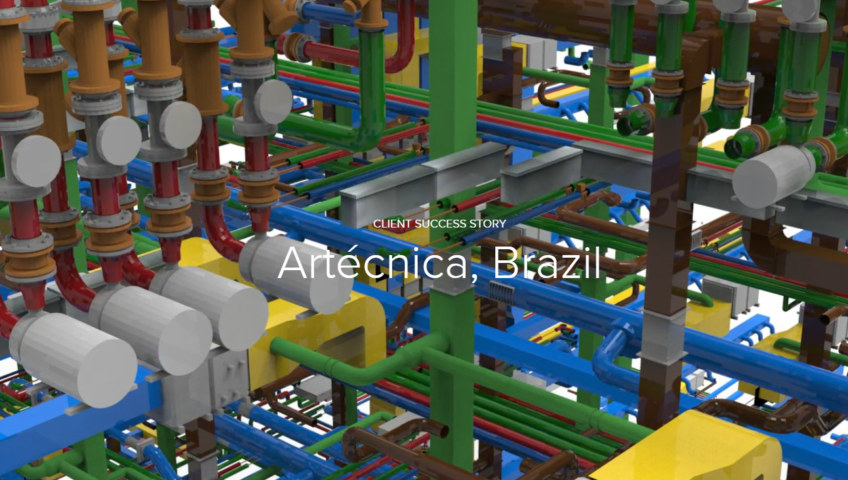
About Artécnica   Artécnica is an engineering company that specializes in the innovation, planning, modeling, design, and evaluation of HVAC and industrial thermal systems. Established by two mechanical and electro-mechanical engineers, the firm operates throughout Brazil, working with a wide portfolio of renowned clients including hospitals, universities, resorts, waterparks, factories and pharmaceutical laboratories, including a number of LEED and WELL-certified buildings. The team are active members of several local and international professional associations including ASHRAE, the North American Society of Refrigeration and Air Conditioning Engineers and ISPE, the International Society of Pharmaceutical Engineers; and contributes to the development of new national and international norms and standards. A cost-effective and easy-to-use solution Artécnica started working with DDScad in 2013, after many years searching for an MEP software solution that was cost-effective, easy to implement, learn and maintain. The team now relies on DDScad for design, documentation and building coordination. Artécnica uses DDScad to generate thermal loads, using gbXML files which can then be easily exported to the thermal analysis software. This speeds up the process, meaning a faster turnaround time for clients. Initially, most of the information Artécnica received from architects was in 2D, so they began by converting the files into 3D to work on top of DDScad. Now, architects more typically work in 3D and Artécnica brings the information directly into DDScad via IFC. A pioneer in BIM design and OPEN BIM collaboration, Artécnica has developed numerous items for the DDScad product database, which are now available for all DDScad users in the world. ,,We began by transforming 2D design into 3D, which could be done easily after a few hours of training and generated good benefits in the office. The learning process was simple and our employees were already able to work on the first projects after a simple, 16-hour course'', says Anderson Rodrigues, Director, Artécnica. Complex air conditioning for a general hospital Digital design with DDScad is a great help for Artécnica, especially for projects that are challenging in their size and complexity, like the design of the direct expansion air conditioning for a new general hospital in Caxias do Sul in southern Brazil with 33,000 square meters and 4,244 kW of installed generative power. With the help of DDScad, Artécnica transformed the 2D architectural plans into a 3D model in just two weeks. From there, it was straightforward to create the gbXML file for use with the Trace® 700 (now Trace® 3D Plus) thermal analysis software. Working in 3D, Artécnica took the locations of the cable trays and designed the ducts and pipes to run above the corridors. The 3D model helped the client to visualize the installations including the thermal power plant, engine room, pump room and operating room. Vaccine factory built with multidisciplinary BIM design The team was commissioned to design the air conditioning system for a new 6,000 square meter vaccine factory and research center with biosafety levels NB1, NB2 and NB3. Located in the city of Belo Horizonte, the project was fully designed and developed in BIM, from initial concept through to final delivery. Artécnica developed the project very quickly using DDScad with the architects working in Archicad. The compatibility between DDScad, Archicad and other disciplines meant that collaboration was straightforward. The team integrated the air balance and thermal load balancing programs Trace® 700 and Trace® 3D with DDScad to achieve a complex design. In addition, producing a bill of materials and accurate documentation for the customer was both quick and easy to do. ,, A big advantage of working with this integration between DDScad and Archicad, is that the export to IFC from Archicad is perfect for us. There is no need to make any insertion point changes, for example, and it’s very compatible with DDScad.’’-Senior Partner, Artécnica, Maiccoll Olm. Design simulation ensures weather protection A 35,400 square meter beach resort and water park in Tamandare Praia de Carneiros was completed with the help of DDScad. The project posed numerous challenges due to its coastal location in northeastern Brazil, including the sea air, salt water and the prevailing wind. DDScad was invaluable in helping Artécnica to simulate not only the solar orientation but also the wind power and direction. The entire HVAC infrastructure was designed around the complex thatched roofs and with the help of DDScad, the team developed a solution that would protect the equipment from the elements. Moreover, seeing the benefits of working in 3D and BIM, the client was inspired to bring the architecture to 3D, along with other disciplines. Faster MEP design with BIM integration Artécnica worked with Brazilian architect and long-time Archicad user AT Arquitetura to design and develop the Unimed Federation office building in Porto Alegre, with the aim of achieving LEED certification. In developing the air conditioning system for the commercial complex, Artécnica applied a dedicated external air system (DOAS), which treats external air to deliver clean, dehumidified indoor air to the building. Artécnica and AT Arquitetura have been working together for almost a decade on several projects, with both organizations benefiting from OPEN BIM and the integration between DDScad and Archicad.

Read more

Streamlining Construction Finances: Achieve Accuracy and Success with Bexel Manager

We already know much about BIM models and its benefits for design and project management works. How it can improve design quality, how it gains productivity and helps coordinate and communicate. But what about most important thing at any construction or project design?  FINANCIAL PART? How we are usually calculating costs of our design? Or how our clients are calculating their project budgets? How accurate it is?  And how often it changes during construction stage? Working with traditional approach most of the cases it is done manually by estimate specialist. This process is time consuming and quality or accuracy of this works depends on qualification of estimate specialist and his knowledge. In other words – it is always a risk, that something can be missed and always working manually with spread sheets - human factor can impact a result. Mistakes can happen here (and usually it happens) that due to large project scale / large amount of data is not noticed by specialists early. Budget calculations then are wrong and FINANCIAL project part suffers. Later it is noticed during construction stages, but solving these issues takes a lot of time and energy, also most important – it reflect to overall project success – it is delayed and overbudgeted (in most of the cases). What can be a solution for improvement? No worries! Tools and methods already exist. One of it – I would like to present – it is platform for 5D workflow organization - BEXEL MANAGER.  What it can do? It actually can do all you need to complete your project successfully. Any project nowadays can be characterized as 2D, 3D, 4D or 5D. Well, 2D is a traditional drawing and documents form base project with traditional approach for management and construction – we will not talk about it too much and concentrate more on 3D and 5D projects. 3D is generally BIM model or digital twin of real building that reflect all geometry and physical parameters of it. 5D is 3D model enriched with execution time – scheduling and financial or budget planning data. We will compare 4 typical workflows that can be done with BEXEL. LEVEL 0 It is beginners’ level who already have +/- BIM model for their project.  It is not very detailed, it does not have correct elements classification system, but can already be imported to BEXEL. Using traditional approach for project analysis and planning it can already help to improve and automate calculations works. It does not save time but radically improves accuracy and quality for estimate comparing to traditional work flow using sheets and drawings. Well start working from LEVEL 0 is a good option for companies that just started using 3D BIM models and wants to improve and integrate project estimate and time schedule with project model. LEVEL 1 For companies that already have enough practice working with 3D BIM models and models are already enriched with correct elements classification system from CSI (North America Construction Specification Institute) or UNICLASS (UK, unified construction classification system). Costs are added to items manually, but all other is automated. In this case BEXEL improves estimation time to 5 – 10 times comparing with LEVEL 0. LEVEL 2 Companies that gained enough practice working with LEVEL 1 can shift to BEXEL LEVEL2. This is where BEXEL starts showing at its best. Detailed BIM model and rich elements classification system allows to import and moderate data baes with resources – materials and labor costs. IT CAN BE ADJUSTED ACCORDING TO CONTRY LOCAL ESTIMATION NORMS AND STANDARDS as well official market research catalogues can be imported to BEXEL and used as data bases for projects estimation. Whole workflow process in this case BEXEL does according to ISO 12006 standard! Cost estimate automation at this stage allows to reach such quality and time saving level that comparing it to traditional 2D does not have a sense anymore. This is where we have correct and full 3D BIM integration and upgrade it to 5D. LEVEL 3 Its advanced level. At this stage LEVEL2 workflow is even more automated. Knowledge bases already created and used with different construction methodologies to optimize and analyses projects in different aspects of construction costs and construction time relation. To summarize – BEXEL unique application that should be already used at any large scale project design or project management firm. BIMSOLUTIONS GROUP and our experienced specialist can already provide consultancy and trainings for companies in Georgia willing to start and improve their work. After short time working with BEXEL companies will be able to provide for their clients completely  different level COST ESTIMATION / PROJECT BUDGETING and PROJECT SCHEDULING services. So don’t miss up this opportunity to gain your skills and improve your work. Starting today with BEXEL you will become a leader of tomorrow!

Read more

Project cost estimation and budgeting with BIM

Building Information Modeling (BIM) has revolutionized the architecture, engineering, and construction (AEC) industry by providing a digital representation of buildings and infrastructure projects. BIM's multidimensional and data-rich model enables stakeholders to collaborate effectively throughout the project lifecycle, from design to construction and operation. One area where BIM has proven particularly beneficial is in cost estimation. In this article, we will explore how BIM-based approaches enhance cost estimation efficiency, leading to improved project planning and budgeting. The Traditional Challenges of Cost Estimation: Before the widespread adoption of BIM, cost estimation was primarily a manual and time-consuming process. Estimators relied on 2D drawings and specifications to quantify the materials, labor, and other resources required for a project. However, this approach often led to inaccuracies, omissions, and a lack of transparency. Changes in design or scope required significant rework, impacting the overall project budget and schedule. BIM: A Game-Changer in Cost Estimation BIM provides a holistic and comprehensive view of a project by integrating geometric information, spatial relationships, quantities, and material specifications into a single model. This intelligent model serves as a central repository for project data and facilitates accurate and efficient cost estimation. Here's how BIM improves the cost estimation process: Accurate Quantity Takeoff With BIM, quantities can be extracted directly from the model, eliminating the need for manual takeoffs. By linking objects within the model to relevant databases and material libraries, estimators can generate precise quantity calculations, reducing errors and inconsistencies. Real-Time Cost Tracking BIM-based cost estimation tools enable estimators to associate cost data with model elements. As the design evolves, the cost information is automatically updated, providing real-time cost tracking and facilitating early identification of potential budget overruns. Enhanced Visualization and Analysis BIM allows estimators to visualize the project in 3D, making it easier to identify complex elements that may impact cost. Clash detection functionalities enable the detection of design conflicts and potential cost implications, allowing for proactive problem-solving. Scenario-based Cost Simulations BIM-based cost estimation tools enable estimators to create multiple cost scenarios by adjusting design parameters, material choices, or construction methodologies. This capability enables project teams to explore different options, evaluate their cost implications, and make informed decisions to optimize the project budget. Improved Collaboration and Coordination BIM fosters collaboration and coordination among project stakeholders, including architects, engineers, contractors, and estimators. By working on a shared digital platform, teams can exchange information seamlessly, reducing miscommunication and enhancing the accuracy of cost estimates. BIM-based cost estimation also promotes early involvement of estimators, enabling them to contribute valuable insights during the design phase and avoid costly redesigns. Integration with Project Management Integration with Project Management: BIM-based cost estimation can be integrated with project management software, creating a unified platform for project control and monitoring. This integration enables project managers to track cost-related activities, monitor progress against the estimated budget, and make timely adjustments if deviations occur. By linking the BIM model to scheduling and procurement systems, project teams can streamline the procurement process, optimize material delivery, and reduce project delays. Conclusion BIM-based cost estimation is transforming the AEC industry by enhancing efficiency, accuracy, and collaboration. The integration of BIM with cost estimation processes empowers estimators to; Generate more accurate estimates Reduce the risk of budget overruns, a Improve project planning and decision-making. As BIM continues to evolve and gain wider adoption, its impact on cost estimation will only become more significant, leading to better project outcomes and increased stakeholder satisfaction. [vc_single_image image="20179" img_size="large"]

Read more

Designing in 2D is expensive

Designing using 2D technologies, such as Autocad, ZW-CAD, NANO-CAD, etc., is more expensive, because modern BIM design technologies allow you to work much faster, saving time. Time, on the other hand, is money.

Read more

It’s time to invest in civil engineers!

Today, when construction prices are rising, in fact the only way to fit into the budget is a rational, well-thought-out and optimized project. The most important role is that of the civil engineer. However, it is not easy!

Read more

Training pays off!

Companies that invest in specialist training are more successful because the company's competence and the competence of its specialists are the company's intellectual property. 

Read more

A Tekla engineer is a sought-after engineer

The most demanded engineers are those who can work in Tekla Structures, demand for Tekla Structures specialists is still very high. And there is a shortage not only of engineers, but also of companies capable of working with Tekla Structures.

Read more

How much does BIM cost?

It cannot be said that this is new. Just as we moved from drawing boards to computer-aided design, we are now moving to BIM There is a lot of talk about the benefits of BIM, and there is still a pressing question among clients, both private and public, - what exactly are the costs of BIM. When working with public and private customers, the question of how much BIM will cost is often encountered. In the past, this question had to be faced in almost every conversation with the customer, but now this question is becoming more and more rare. Clients learn on their own and share their success stories with colleagues, which encourages other clients to focus on BIM as well. In any case, the question of BIM costs is relevant for everyone who starts a construction project, because everything starts with the budget. Answering this question requires understanding the cost of not using BIM on a project. And not using BIM costs the client a lot. How much? According to the BIM implementation road map developed by the Ministry of Economy in Latvia (you can find out more about the BIM road map on the website of the Ministry of Economy www.em.gov.lv), the use of BIM in a project reduces construction life cycle costs by 20%. BIM also shortens construction time by 10%, providing the client with more optimal building functionality and higher quality construction. To help interpret the mentioned numbers, below is a breakdown based on the following breakdown of long-term construction costs: ~5% design, ~20% construction; ~75% maintenance. In the calculation, an assumption was made that the construction costs amount to one million. To understand what savings are made of, you have to start from the beginning - with the project, because a higher quality project means a more accurate estimate and a higher quality construction. A qualitatively implemented project (built as designed) lays the foundation for effective building maintenance Designing Customers cannot count on cost savings during design. On the contrary, design costs can increase up to ~5% of construction costs. Why is that? Quite simply because the project development takes longer, because BIM significantly reduces the possibility of leaving unnoticed mistakes in the project. In fact, during the design process, those issues that we traditionally solved on the construction site are solved. It should be noted that BIM tools significantly accelerate the development of the project itself, assuming that the designers have learned BIM authoring programs and use the full potential of the tools. Additional time is needed to coordinate the project sections, during which project deficiencies are identified and corrected with the goal of creating a buildable BIM model, or a project that does not contain errors that could delay construction works (this is one of the benefits, In addition to that, the gaps eliminated during BIM design (collisions, underestimation of the minimum height, unexpected distances for equipment maintenance, etc.) protect the customer from unexpected expenses, which can reach significant amounts. Estimation The noticeable cost savings compared to the traditional approach appear when you start estimating. Traditionally, volumes are retrieved from drawings. This effectively means that the estimator calculates the amounts by hand, often generalizing and rounding them up. In this case, an estimator means both an (independent) estimator represented by the customer, an estimator for builders, an estimator for manufacturers of construction products, and an estimator for construction works. Several parties are involved in the estimation process and each party interprets the amounts "in its own way". Often, the customer puts in his margin, the manufacturer puts in his, and the builder puts in his margin. The result is an increase in costs that is practically impossible to track. These costs usually remain with the builder as profit. If the project is implemented in the BIM environment, we can retrieve the volumes automatically from the BIM model - the same for all, transparent, This provides a more accurate estimate and lower risks for the customer. BIM protects the client from unreasonable amounts, while providing clarity to the contractor about the required amounts. Exact cost savings are difficult to estimate, but based on experience, the difference between the volumes calculated from the drawings and the volumes obtained from the BIM model can reach up to 15%. Construction In order for the construction to comply with the project, it is essential to control the progress of the construction process and compliance with the construction project. The existence of a BIM project opens up wide opportunities for the customer to control the construction process more effectively. Goal one, reduce or control construction costs. BIM gives the opportunity to simulate the construction process, control the construction calendar schedule, status, changes, volumes and interim deliveries (the submitted documentation is compared with the actual situation in the object and the built volumes, which are retrieved from the BIM model). In short, complete control over what is happening on the construction site. In addition, significant operational risks are eliminated by developing a BIM model for production purposes, for example, steel structure detailing (commonly known as MKD) is linked to other models to ensure that This, as you understand, is closely related to costs and deadlines. Incorrectly delivered constructions carry with them the risk of delays and additional expenses. Not to mention the safety aspect associated with on-site corrections of inaccurately delivered structures. Management Just as construction is closely related to design, management is closely related to construction and the information gathered during construction. The higher the quality of the information (use instructions, declarations of conformity, warranty passports, technological schemes, drawings, acts, etc. documents), the more efficiently it is possible to manage the building. Qualitative information makes it possible to move from "firefighting" to proactive management, or a systematized real estate management system that is not based on one person who knows everything about everything, often leaving management (the biggest long-term cost) to fate. Those who have had to deal with the mountains of documents that are received at the handover of the building understand that it is almost impossible to navigate them and after the warranty period they are completely forgotten, laying the foundation for traditional management, which is the responsibility of the one person or one company whose task is to "put out fires". Often, the customer is tied to the manager for life, because management is almost impossible without him. BIM serves as a catalyst for the collection of digital, structured, trackable, full-value information during construction, creating a building's digital twin, or BIM model, that matches the actual building along with information that links to building elements Updating the BIM model during author supervision, supplementing it with production models, while envisioning the customer's unified data environment in which the builder must deliver digital information about the built elements seems a self-evident requirement, but it is not as simple as it sounds. To realize this, all project participants must be disciplined. Discipline is provided by BIM managers and coordinators, who can be either from the customer's side, from the builder's side or as independently engaged specialists. When the customer receives the building's digital twin, it opens up wide opportunities to streamline the management process. Even without a specialized IT system, this information provides great added value, as it enables information to be transferred to the right person at the right time in a form that is understandable to all. Information about the building will no longer be stored in the memory of one person or with one management company, which you cannot refuse, because it has all the necessary information. The BIM asset information model is stored on a centralized server controlled by the client. This information makes it possible to receive more cost-effective offers, because you have digital information that opens up opportunities for the manager to optimize and streamline their processes, while maintaining control over the construction information, which allows you to review the effectiveness of the chosen service provider and replace it if more advantageous offers appear. In addition, structured information reduces the risk of missing important equipment maintenance, as a result of which the customer can face significant expenses, which is unfortunately a frequent situation. because it has all the necessary information. The BIM asset information model is stored on a centralized server controlled by the client. This information makes it possible to receive more cost-effective offers, because you have digital information that opens up opportunities for the manager to optimize and streamline their processes, while maintaining control over the construction information, which allows you to review the effectiveness of the chosen service provider and replace it if more advantageous offers appear. In addition, structured information reduces the risk of missing important equipment maintenance, as a result of which the customer can face significant expenses, which is unfortunately a frequent situation. because it has all the necessary information. The BIM asset information model is stored on a centralized server controlled by the client. This information makes it possible to receive more cost-effective offers, because you have digital information that opens up opportunities for the manager to optimize and streamline their processes, while maintaining control over the construction information, which allows you to review the effectiveness of the chosen service provider and replace it if more advantageous offers appear. In addition, structured information reduces the risk of missing important equipment maintenance, as a result of which the customer can face significant expenses, which is unfortunately a frequent situation. because you have digital information that allows the manager to optimize and streamline their processes, while keeping control over the construction information, which allows you to review the effectiveness of the chosen service provider and change it if more favorable offers appear. In addition, structured information reduces the risk of missing important equipment maintenance, as a result of which the customer can face significant expenses, which is unfortunately a frequent situation. because you have digital information that allows the manager to optimize and streamline their processes, while keeping control over the construction information, which allows you to review the effectiveness of the chosen service provider and change it if more favorable offers appear. In addition, structured information reduces the risk of missing important equipment maintenance, as a result of which the customer can face significant expenses, which is unfortunately a frequent situation. How to achieve the benefits of BIM? With what to start? The magic word "BIM" in procurement and contracting alone is not enough. Unfortunately, we have often had to face a situation when the contract stipulates that the project must be supplied with BIM. In the hands of an expert, such a sentence is sufficient, but for the public and, of course, also the private customer, it is far too little. The customer must know what to order, because incomplete or, on the contrary, exaggerated requirements can result in an inadequate price increase, which can "eat" a significant part of the cost savings provided by BIM. . Suppliers participating in tenders have already learned BIM, purchased software and appropriate computer equipment. At the same time, these specialists are also aware of the specifics of BIM and the fact that a longer time should be spent in the design phase, which is related to issues that should be resolved during the author's supervision (or leaving these issues under the competence of the builder) In order to be able to use the BIM the customer must understand BIM and its capabilities and order the relevant BIM applications to achieve the set goals. Skills can be acquired through self-study or by attending BIM Masterclasses (more details at BIM ACCADEMY. Taking into account the fact that the path of self-learning often takes a long time without a guarantee that the necessary skills will be acquired, we recommend master classes during which practical skills are acquired from leading BIM specialists. After the training, the customer is able to independently prepare the necessary BIM documentation for the purchase of high-quality BIM, and is aware of the necessary activities that must be performed to ensure high-quality BIM deliverables that contribute to cost savings. Of course, you can use an outsourcing service in the development of BIM requirements, but this only postpones the customer's need for skills to order high-quality BIM, because BIM, according to the roadmap of the Ministry of Economy, will be mandatory in public procurement from 2025. What costs should be expected when ordering BIM As previously mentioned, obtaining cost savings from BIM requires resources in BIM project development and BIM deliverables control. By its nature, BIM costs are regulated by the market and the current market ensures normal competition, which means that BIM costs what it costs. On average, the customer should expect that the design costs are about 5% of the expected construction costs. In addition, a budget should be provided for the control of BIM deliveries both during design and construction, which, depending on the size of the project, ranges from ~1,500 to 3,500 + EUR / month. These expenses are intended for BIM management and coordination, which can be done on the customer's side (staff) or as an outsourced service. It is not for nothing that the leading public and private real estate developers have started demanding BIM several years ago, because BIM can provide significant cost savings. Yes, BIM brings with it changes in processes and the way a project is carried out, but these are positive changes. BIM returns control over the project implementation and maintenance process to the hands of the client, allowing more efficient management and realization of their real estate. In summary The benefits of BIM far outweigh the expenses associated with BIM. Not using BIM costs the customer much, much more than if the project is implemented using BIM.

Read more

Latvia`s leading engineers choose Tekla Structures!

Latvia can be proud of its engineers, because the competence of leading engineers allows to develop a high-quality BIM model, thereby promoting the competitiveness of companies outside of Latvia as well. Leading engineers choose Tekla Structures as a quality BIM model development tool.

Read more

Tools for a successful BIM specialist

BIM Specialist. A new profession that requires new (and not so new) skills. The demands for BIM specialists are increasing, but what then distinguishes, for example, a designer-technician from a BIM technician?

Read more

How to exchange information on construction site? let’s get serious

Spent several hours working with the document and it turned out that it is not the laeng current version. You cannot quickly find the necessary information in e-mails. There are many folders and documents on the shared server and it is difficult to find what you need. Changes have been made to the model and it is not clear which is the laeng version.

Read more

From AutoCAD to Tekla Structures: the experience of PAVLIDI IR KO UAB

UAB "PAVLIDI IR KO" has been providing building design services since 1995. Since opening till today engineers-designers who formed the core of the opened company are still working in the company. We talk to the company's long-term employees about the acquired heritage, competences and changing design tools.

Read more